

What Chikankari actually is
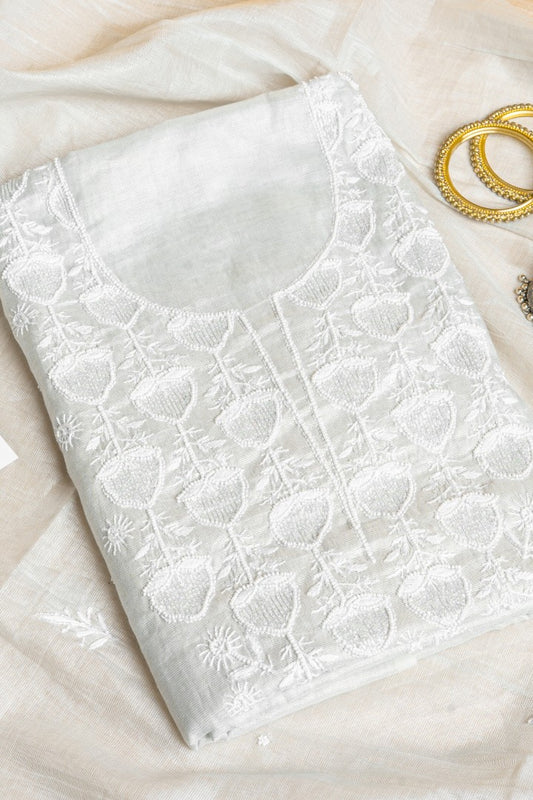
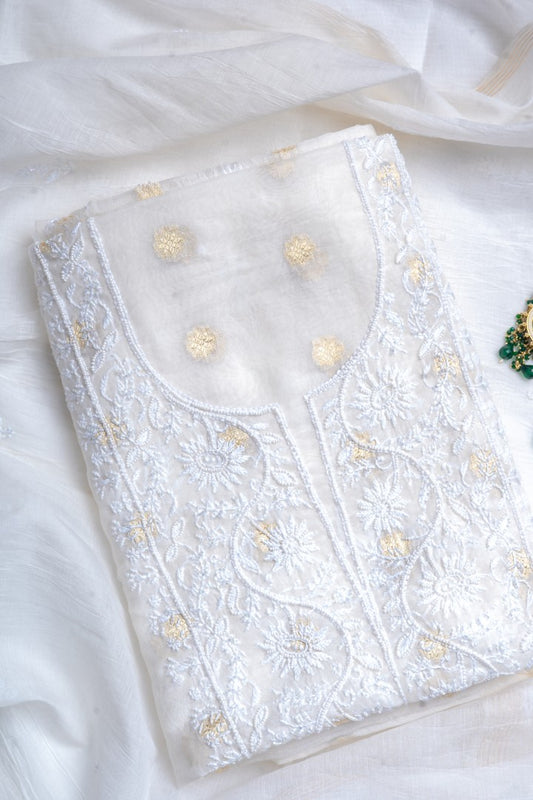
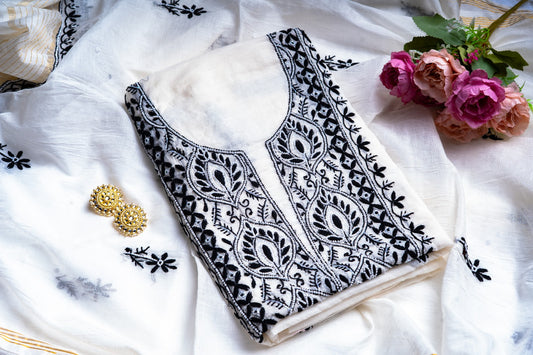
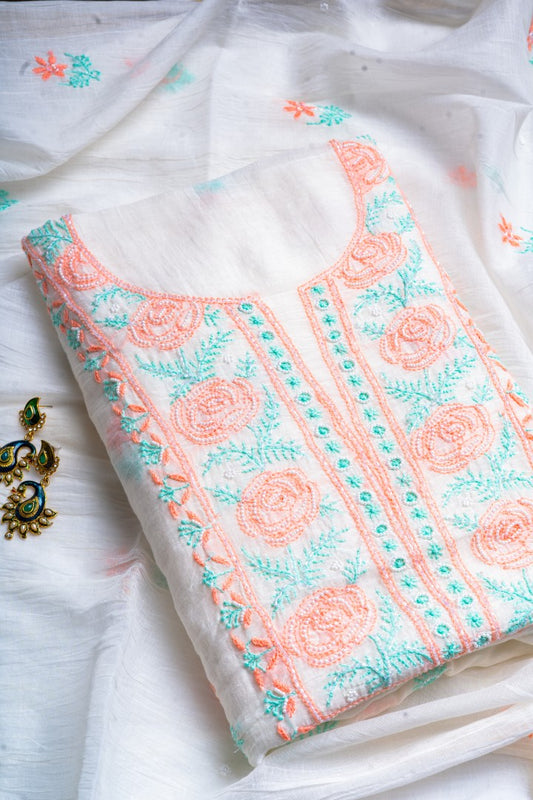
Chikankari is white thread on white cloth, which is the first thing that makes it difficult and the last thing people notice.
The technique is a form of shadow work. On the pieces it is best known for, the embroiderer works on the reverse of the fabric, filling a motif with herringbone stitches from behind. What you see from the front is not the thread itself but its density showing through fine cotton - a shape surfacing rather than a line drawn. Hold a good piece up to a window and the pattern half disappears.
Lucknow has been the centre of this work for centuries. The popular story credits Nur Jahan, the Mughal empress, with introducing it; that account is widely repeated but thinly evidenced, and older references to figured muslin from the region predate her considerably. What is not in question is that the city and the craft became inseparable, and that the vocabulary of stitches was developed there.
There are thirty-two named stitches. Most commercial Chikankari uses about six. The rest survive because a small number of people still know them and a smaller number still commission them.
A finished piece is not the work of one person. The pattern is block-printed onto the cloth in a fugitive blue ink. It passes to an embroiderer, often to several — one for the shadow work, one for the knots, one to open the jali. Then it goes to the washerman, who removes the printed guidelines entirely. If the washing is done badly, months of work is ruined at the last step.
That is the part worth sitting with. The guidelines are meant to vanish. What remains is only the stitching.