

Tension
Ask an embroiderer what makes good Chikankari and the answer is rarely a stitch. It is tension.
A phanda knot has to be tight enough to hold its shape and small enough to disappear into the motif. Neither is possible if the cloth shifts under the needle. So before any stitching begins, the fabric is held taut — in a small frame, or simply stretched between the fingers of a practised hand — and kept that way, at the same tension, for hours.
It sounds like a minor detail. It is not.
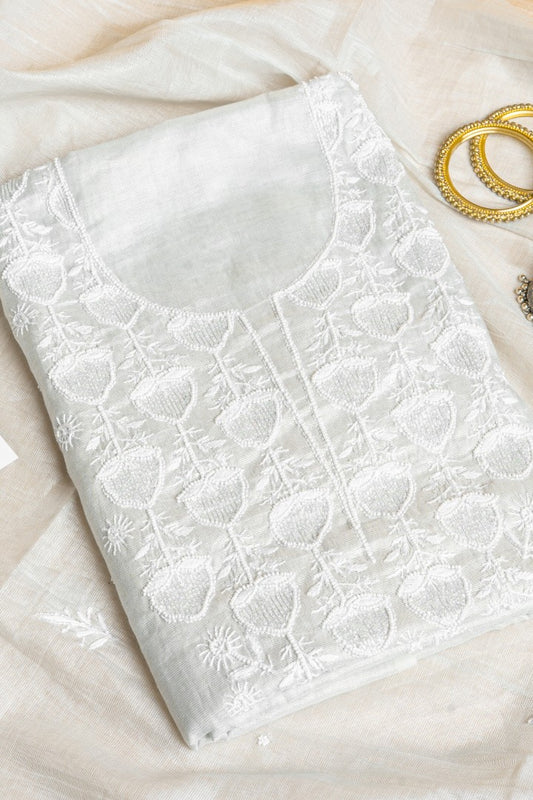
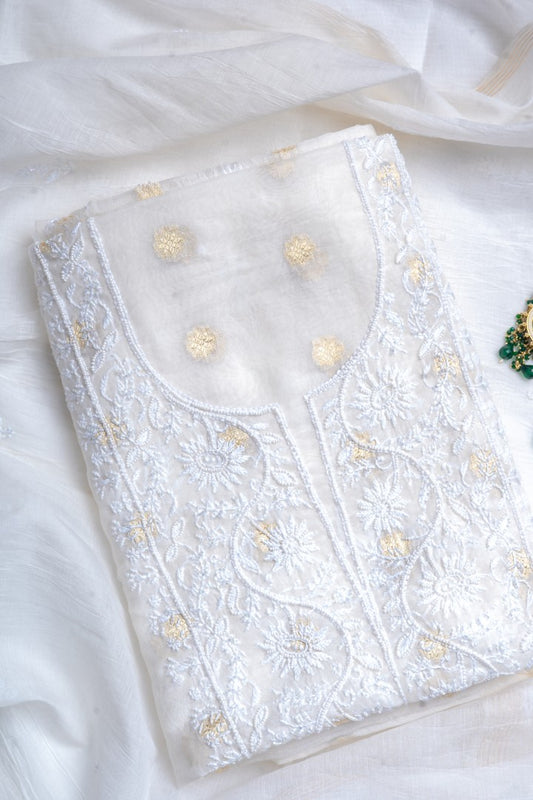
Too loose, and the fine cotton puckers around every stitch. Too tight, and the needle drags the weave out of line, which no amount of washing will put back. The finished piece shows the difference immediately: work done under even tension lies flat and reads clean; work done without it ripples.
This is also why a single piece so often passes between hands. The person who outlines a motif, the person who fills it with shadow work and the person who opens the jali each have to pick the cloth up at exactly the tension it was left at. A good group works almost as one pair of hands.
There is a cost to this, and it should be said plainly: hours of close, tensioned work are hard on the eyes, the neck and the hands. Good light and proper rest are not luxuries. They are the difference between a thirty-year career and a fifteen-year one.