

Mul, and why the cloth matters as much as the thread
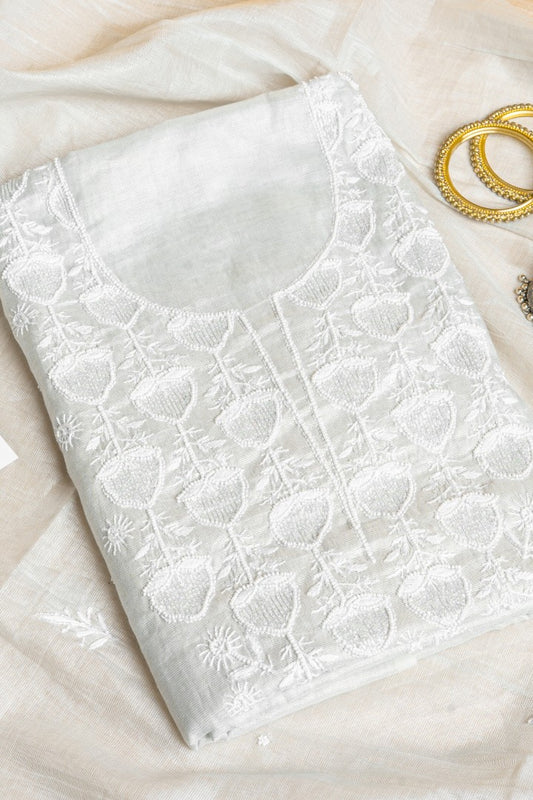
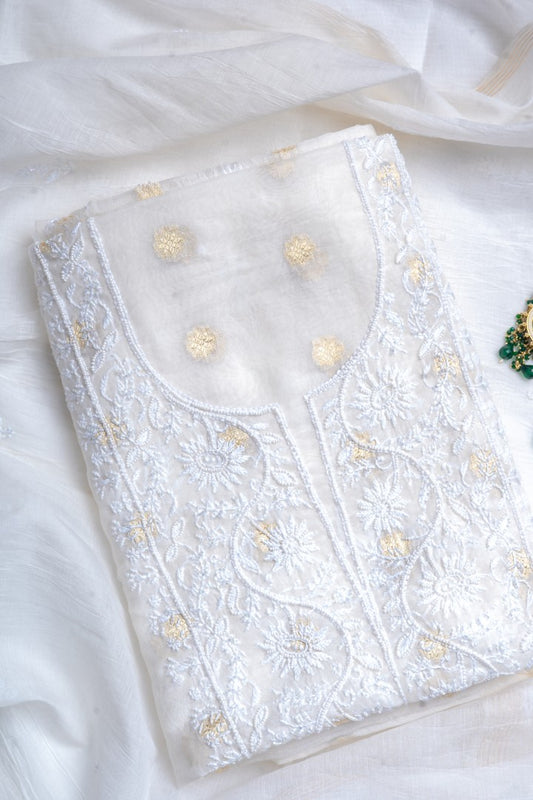
Shadow work depends on translucency. If light will not pass through the cloth, the motif cannot surface from behind it, and the entire effect collapses. This is why Chikankari is worked on the fabrics it is worked on, and why a heavier substitute is not a substitute.
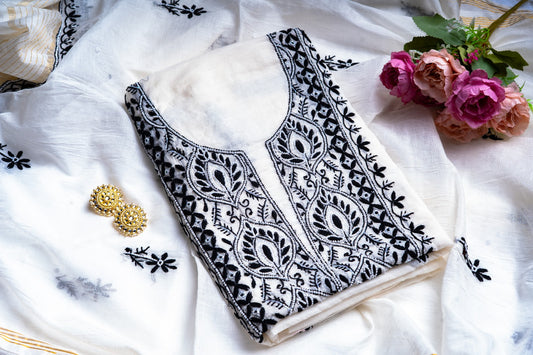
Mul (mulmul) is the traditional choice — a fine, soft, loosely woven cotton. It takes the needle easily, it drapes rather than holds a shape, and it is almost weightless in summer. It also creases if you look at it wrongly, which some people find charming and others find intolerable. Both reactions are reasonable.
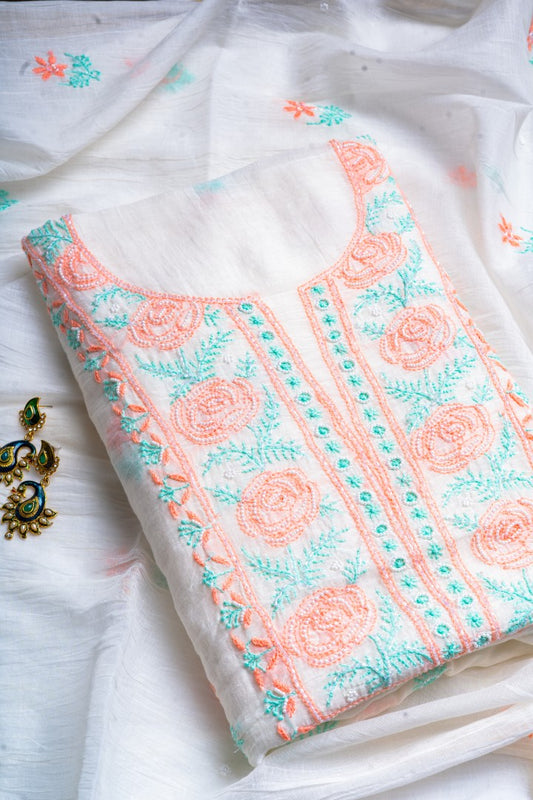
Cotton voile is a little more tightly woven and a little more robust. It holds a press for longer and survives frequent washing better. Slightly less translucent, so shadow work reads a touch more solid on it.
Georgette is not traditional but is now common, particularly on ready-to-wear. It drapes heavily, resists creasing, and suits a more formal line. The embroidery sits differently — more on the surface, less inside the cloth.
Silk organza is the difficult one. Beautiful with jali work, because the lattice reads sharply against the sheen. Unforgiving of any mistake, and it does not like being washed.
If you are buying your first piece and want it to be worn rather than kept, mul
or voile. If you want the piece to look the way Chikankari looks in photographs,
mul, and accept the creasing as part of the arrangement.