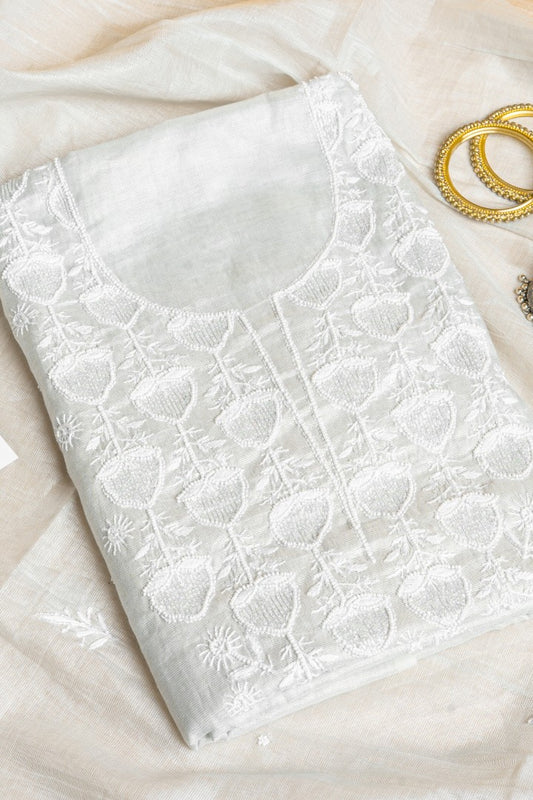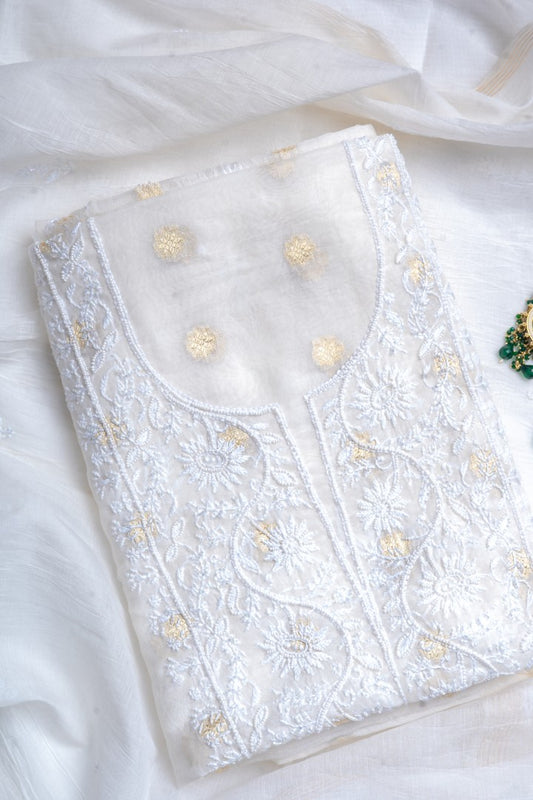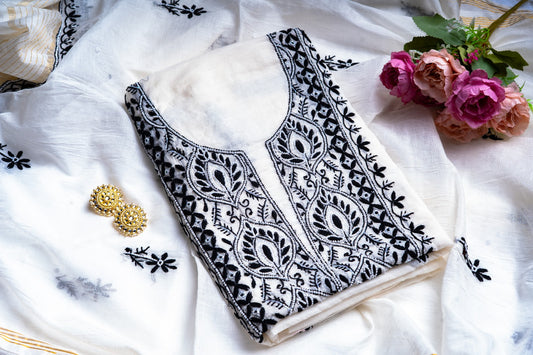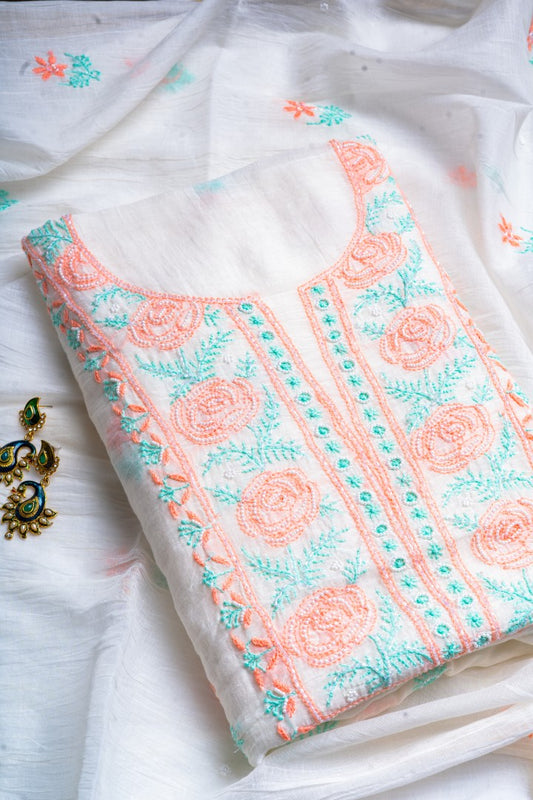


How to look after hand embroidery
The work took days. The care takes minutes. It is worth doing properly.
Wash by hand, separately, in cold water. A mild detergent, no soaking beyond a few minutes. The first wash of a new piece should always be alone — even well-fixed dye can release a little at first.
Do not wring it. This is the one that ruins pieces. Twisting drags the embroidery against the weave and can pull jali work out of shape permanently. Press the water out between your palms, or roll the piece in a towel and press.
Dry in shade, never in direct sun. Sunlight yellows white thread and fades natural dye faster than anything else you will do to it. Flat or on a wide hanger; a thin wire hanger will leave shoulder marks in fine cotton.
Press on the reverse, warm iron. Ironing the front flattens the embroidery and kills the relief that the stitching exists to create. On the reverse, the stitches keep their depth. A pressing cloth helps on silk or organza.
Store folded, with the embroidery inside , in cotton or muslin rather than plastic. Fine cotton needs to breathe. If you are storing something for a season, refold it along different lines when you take it out — permanent creases form where the folds always fall.
One more thing. Small irregularities in the stitch are not defects. They are the record of a hand, and on a piece worked over several days by more than one person, they are unavoidable. A garment with no variation at all was made by a machine.